High blood pressure: know your numbers
About one in three Jamaican adults has high blood pressure, and many don’t know it. Here is what the numbers mean and what brings them down.
A reading of 180/120 or higher with chest pain, breathlessness, a severe headache, weakness or vision changes is an emergency.Accident & Emergency at 27 Hope Road is open 24 hours. For an ambulance, call 110. Call us
High blood pressure rarely causes symptoms, which is why it’s called the silent killer. Left alone, it damages the heart, brain, kidneys and eyes. Jamaica’s last national health survey found that about one in three adults has it, and four in ten of them didn’t know.
What the two numbers mean
A reading has two numbers, written like 120/80. The top number (systolic) is the pressure when your heart beats. The bottom number (diastolic) is the pressure when it rests between beats.
- Below 120/80: normal.
- 120/80 to 139/89: higher than ideal. A good time to change habits.
- 140/90 or above on repeated readings: high blood pressure. See your doctor.
- 180/120 or above: very high. If you also have chest pain, breathlessness, a severe headache, weakness or changes in your vision, go to Accident & Emergency.
Getting a reading you can trust
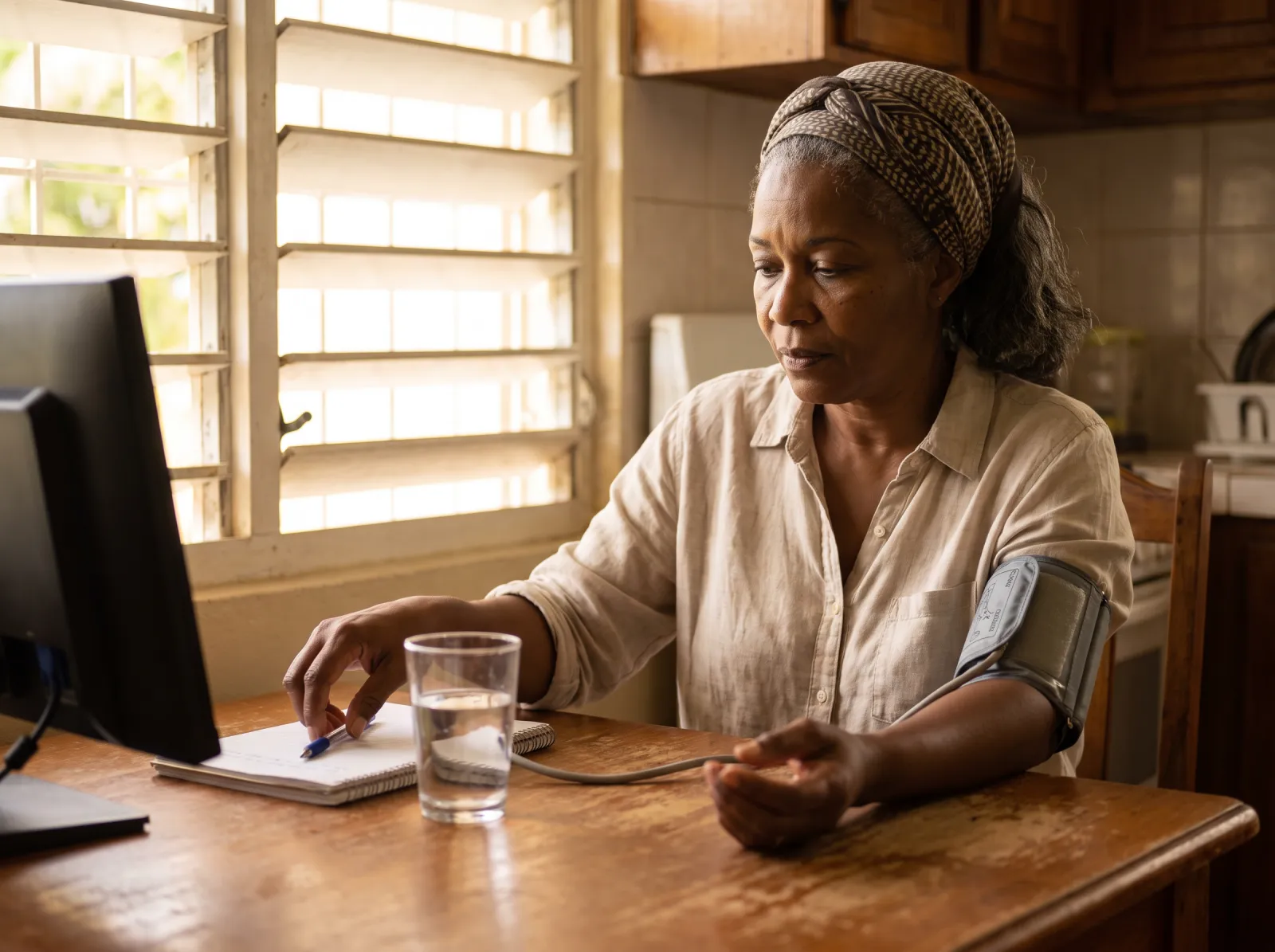
- Sit quietly for five minutes first, with your back supported and feet flat on the floor.
- Rest your arm on a table so the cuff is level with your heart.
- Avoid coffee, exercise and smoking for 30 minutes beforehand.
- Take two readings a minute apart and write both down, with the date and time.
- Check at the same times each day, and take the record to your appointments.
What brings it down
- Less salt. Aim for under a teaspoon a day in total, and remember that seasoning cubes, tinned meats, salt fish and packaged snacks carry a lot of it.
- More movement. Thirty minutes of brisk walking on most days adds up to the 150 minutes a week that doctors recommend.
- A healthy weight. Losing even a few pounds lowers pressure.
- Less alcohol, and no smoking.
- Ground provisions, vegetables, fruit, peas and beans in place of fried and processed food.
- Your tablets, every day, even when you feel fine. Most people need medicine as well as lifestyle changes, and stopping it lets the pressure climb back.